
CONCRETE BLOCK FILLER SERVICES
in San Francisco, Palo Alto & San Jose
At Romanov Painting, we specialize in professional concrete block filler applications for both residential and commercial properties. For over two decades, we have been proudly serving San Francisco, Palo Alto, San Jose, and the Bay Area, helping homeowners, builders, and businesses protect and enhance their masonry walls.
Concrete block walls are strong and durable, but they are also naturally porous. Without proper sealing, they can absorb moisture, dust, and pollutants, leading to cracks, water intrusion, and a shorter lifespan. Our high-performance block filler services provide a smooth, sealed surface that not only improves durability but also creates the perfect foundation for paint or coatings.
Whether you need garage walls, basements, warehouses, offices, or apartment complexes treated, our expert team delivers long-lasting, flawless results.
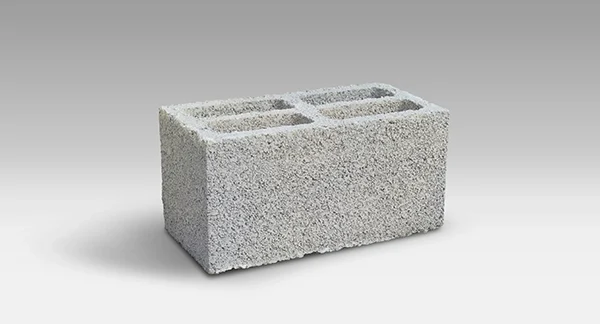
Concrete block filler, made from resin and acrylic, is used for interior and exterior surfaces, so as to fill concrete blocks, cinderblocks, and precast concrete. This product provides a great base for application of latex, alkyd, enamel or epoxy paints on different types of surfaces. Many people do this process themselves, but the process is cumbersome and the DIY approach may yield unwanted results. Thus when using concrete block filler it’s better if you seek the help of a professional. He has all the items and the skills needed which can simplify the work greatly.
A professional knows how to properly prepare the surface before applying the filler — including cleaning, drying, and priming, if needed. This ensures better adhesion and durability of the coating. Experts also apply the filler evenly and efficiently, avoiding common DIY issues like bubbling, cracking, or uneven texture, which can affect the final paint finish.
Why Choose Romanov Painting for Concrete Block Filler?
Over 20 years of experience in residential and commercial painting and protective coatings.
Specialized expertise in sealing porous masonry surfaces and preparing them for topcoat finishes.
High-quality materials — we use professional-grade block fillers that prevent moisture penetration, improve paint adhesion, and extend the life of your walls.
Tailored solutions for both small-scale residential projects and large commercial or industrial buildings.
Full-service approach — from surface preparation and filler application to priming and painting.
With Romanov Painting, you don’t just get a coating — you get a complete protection system for your property.

What We Paint and Seal

Our concrete block filler services cover a wide range of surfaces and spaces:
Residential basements and garages – protect against moisture and create a clean, finished look.
Exterior concrete walls – seal porous surfaces for weather resistance and smoother paint application.
Commercial buildings and offices – improve durability and appearance of interior block walls.
Warehouses and storage facilities – protect high-traffic environments from wear and dust.
Apartment complexes and condos – seal and prepare concrete walls for painting, enhancing aesthetics and longevity.
Industrial spaces – provide a tough, protective coating for walls exposed to harsh conditions.
No matter the project size, we ensure every wall is properly sealed, smooth, and ready for finishing.
Our Concrete Block Filler Process
1. On-Site Walkthrough & Estimate
We begin with a detailed walkthrough of your property, assessing the condition of concrete block walls. During this phase, we check for cracks, moisture issues, and surface irregularities. Based on our findings, we provide a clear, itemized estimate.

2. Surface Preparation
Proper preparation is the foundation of success. We clean the surface, remove dust and debris, repair cracks, and ensure the masonry is dry and ready for filler application. For problem areas, we may apply primers or additional sealing layers.

3. Block Filler Application
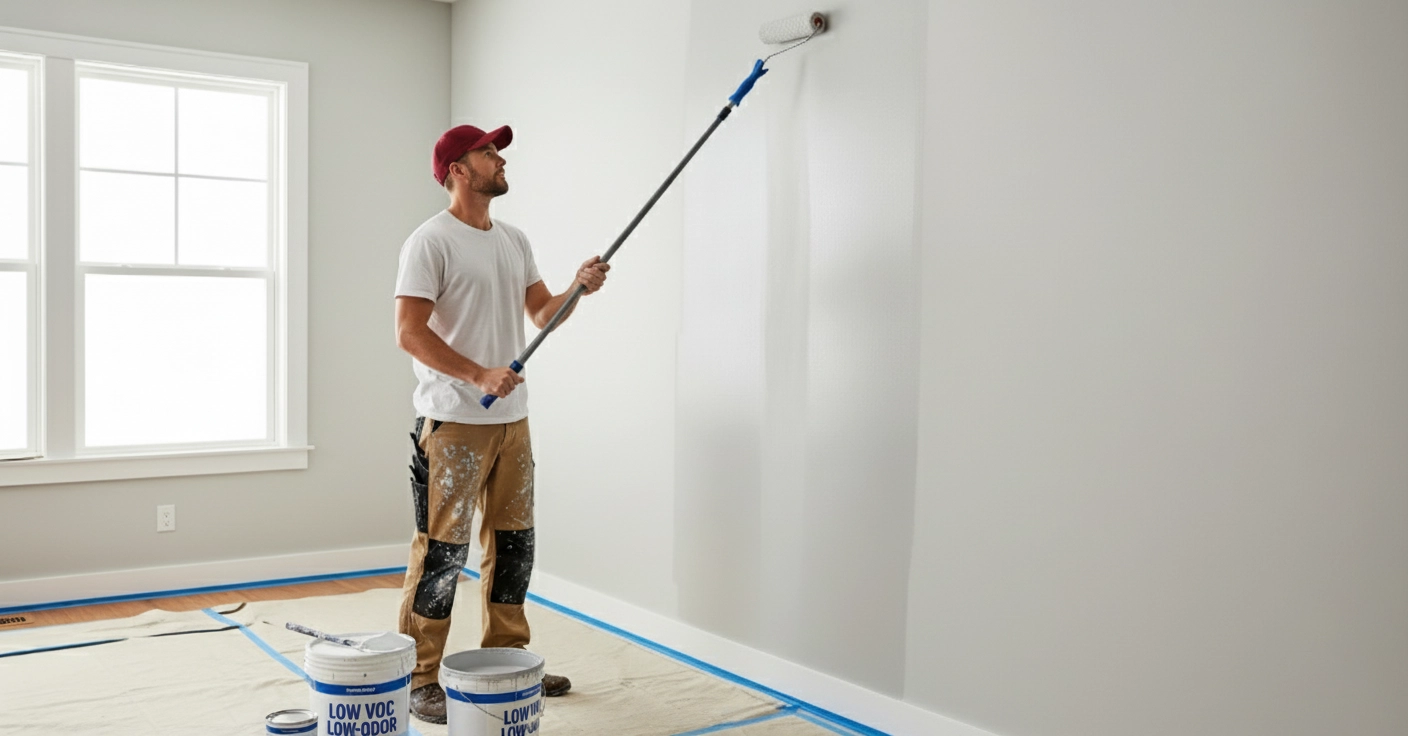
Our team applies professional-grade block filler to seal pores, level out surface imperfections, and create a uniform base. This process strengthens the wall, reduces permeability, and enhances adhesion for future paint coatings.

4. Smoothing & Priming
Once the filler is applied, we smooth the surface for a flawless finish. A primer coat is then added to lock in the filler and prepare the wall for topcoat painting.
5. Final Coating & Walkthrough
After priming, the walls are ready for painting or finishing. We conduct a final inspection with you to ensure every detail meets expectations before leaving the site clean and ready for use.

1. On-Site Walkthrough & Estimate
We begin with a detailed walkthrough of your property, assessing the condition of concrete block walls. During this phase, we check for cracks, moisture issues, and surface irregularities. Based on our findings, we provide a clear, itemized estimate.
2. Surface Preparation
Proper preparation is the foundation of success. We clean the surface, remove dust and debris, repair cracks, and ensure the masonry is dry and ready for filler application. For problem areas, we may apply primers or additional sealing layers.
3. Block Filler Application
Our team applies professional-grade block filler to seal pores, level out surface imperfections, and create a uniform base. This process strengthens the wall, reduces permeability, and enhances adhesion for future paint coatings.
4. Smoothing & Priming
Once the filler is applied, we smooth the surface for a flawless finish. A primer coat is then added to lock in the filler and prepare the wall for topcoat painting.
5. Final Coating & Walkthrough
After priming, the walls are ready for painting or finishing. We conduct a final inspection with you to ensure every detail meets expectations before leaving the site clean and ready for use.
Frequently Asked Questions (FAQs)
Concrete block filler is a thick, protective coating applied to porous masonry surfaces. It seals pores, prevents water absorption, and creates a smooth base for painting. Without it, paint may peel, crack, or fail prematurely.
Yes. Block filler is suitable for basements, garages, commercial interiors, exterior walls, and industrial spaces, making it versatile for many applications.
Most residential projects can be completed within 1–2 days. Larger commercial or industrial jobs may take longer depending on the size and surface condition.
Absolutely. Block filler is designed as a base coat to prepare the wall for painting. Once applied and cured, we add primer and the final paint coat for a polished, durable finish.
Yes. Regular primer does not fill pores or create a smooth surface on concrete block. Block filler is much thicker and specifically formulated to seal masonry surfaces, ensuring long-term durability.
Things to Keep in Mind
 Benefits of using concrete block filler
 There are many advantages to using concrete block filler. It provides exemplary resistance to moisture, and also boasts of great filling attributes. It can be used in deteriorated ceilings and walls with no problem. It can be used in poultry and meat plants as well.Due to its many uses people favor concrete block filler. Should you decide to use this material it’s best if you hire a professional who is knowledgeable in what he does.
Where to use concrete block filler There are many places where you can use concrete block filler. It can be used in hospitals, schools, water treatment plants, sewage facilities, power plants, petroleum refineries, jails, paper mills, chemical plants, tunnels, bottling plants and dairy farms. Concrete block filler can also be used in equipment foundations, and the walls and ceilings made of industrial concrete.
Since concrete block filler is used in industries it’s best to hire a professional since he has all the special equipment needed to finish the task.
How professionals prepare concrete block filler This special item needs special preparations, which can only be done by an expert. Before using concrete block filler, a professional will make sure that all the surfaces are clean. He will use a rag and cleaning solution to get rid of grease, foreign materials, oil, dirt and dust. He will also make use of sandpaper or a wire brush to remove the rust on the surface. With a clean surface, concrete block filler will adhere well.
For a new concrete or masonry surface, concrete block filler must undergo a substrate cure of 75 degrees Fahrenheit, for 28 days. A professional can only do this process. He will also remove laitance, salts, curing compounds, efflorescence and release agents on the surface either by sandblasting, mechanical scarification, muriatic acid etch, and shot blasting.
He will then rinse the surface well with a solution, pH 6-10 and let the surface dry before applying the concrete block filler.
For an old surface, the steps on preparing concrete block filler are similar, but the professional knows that chemicals, oils and grease must be removed first with a high-grade cleaning solution. Hardeners, old paint and release agents also need to be removed by shot blasting, sandblasting and mechanical scarification, which can only be done by experts. If there are rough surfaces caused by deterioration, he will make use of a heavy-duty concrete block filler to seal the crevices, cracks and bug holes on the material.
If there is mildew present on the surface, he will clean the area with a solution made of 1-quart bleach, 3 quarts warm water and 1/3 cup of detergent. A professional knows that ammonia shouldn’t be used. He has the protective equipment (goggles, mask, gloves and apron) needed when removing mildew prior to the application of concrete block filler.
Applying concrete block filler Concrete block filler should be applied in the recommended condition – minimum of 55 degrees Fahrenheit, and maximum of 95 degrees Fahrenheit. These temperatures should apply to the material, surface, and even the air surrounding the area. The relative humidity in the room should be a maximum of 85%. A DIYer cannot attain these temperatures, making it one of the reasons why a professional should be called in for the job.
Methods of application There are different ways of applying concrete block filler, and professionals have all the equipment needed for the application.
Before applying concrete block filler, a professional will purge spray equipment before using it with a reducer. Sometimes a reduction is needed and it must be well-matched with the application condition and the environment. A professional who has years of experience can do this easily.
An expert can also use an airless spray to apply concrete block filler will use the recommended pressure of 2000 psi. The hose should be ¼ to 3/8 inches, with a tip of .028 inches. The filter should be 30 mesh. With a professional you don’t have to worry about these dimensions because they have the equipment needed at hand.
As for a conventional spray, a professional can make use of his Binks 95 gun to apply concrete block filler. The fluid nozzle for this spray is 67, while the air nozzle is 67PD. The fluid pressure will range 20-25 psi, and the atomization pressure should be 50 psi. Reduction of as much as 12% by volume can be done as needed.
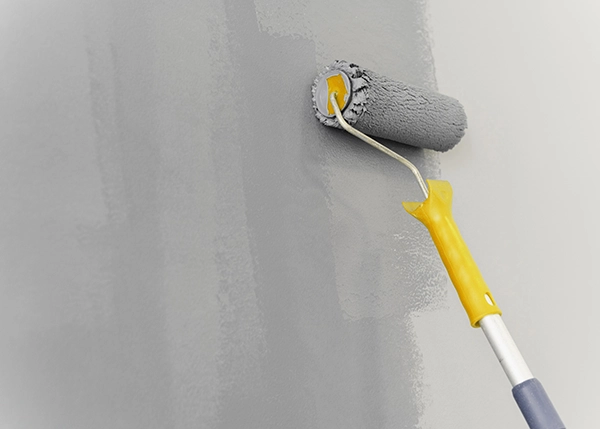
A professional can also use polyester or nylon brush to apply concrete block filler. A synthetic roller measuring 0.5 inch to 1.5 inches can be used. For these materials reduction is not advised. Several coats will be applied with a brush or a roller to make sure that the look is even and uniform.
Why it’s advantageous to hire a professional • A professional who will use a spray to apply concrete block filler knows that it’s important to perform a 50% overlap as he goes with each layer. This will prevent him from missing pinholes and holidays.
• He knows it’s important to avoid too much reduction of concrete block filler, as it can change the adhesive properties, appearance and the film build of the material.
• For a smooth, pinhole-free surface, he will make sure to force the material into the bug holes and the pores with much force.
• He will avoid using the concrete block filler as immersion service or hydrostatic waterproofer.
• He will avoid applying concrete block filler over existing coats.
Concrete block filler has many uses, and only professionals with the needed equipment can perform this task well. If you want to use concrete block filler for your projects, call a trusted contractor right away.


OUR CLIENTS







Feedback From Our Customers
Service Areas
Palo Alto, Menlo Park, Atherton, Redwood City, Woodside, San Carlos, Belmont, San Mateo, Hillsborough, Burlingame, Foster City, Castro Valley, San Ramon, Denville, Pleasenton etc